Disclaimer: This article is intended solely for informational and educational purposes only. It does not constitute medical advice.
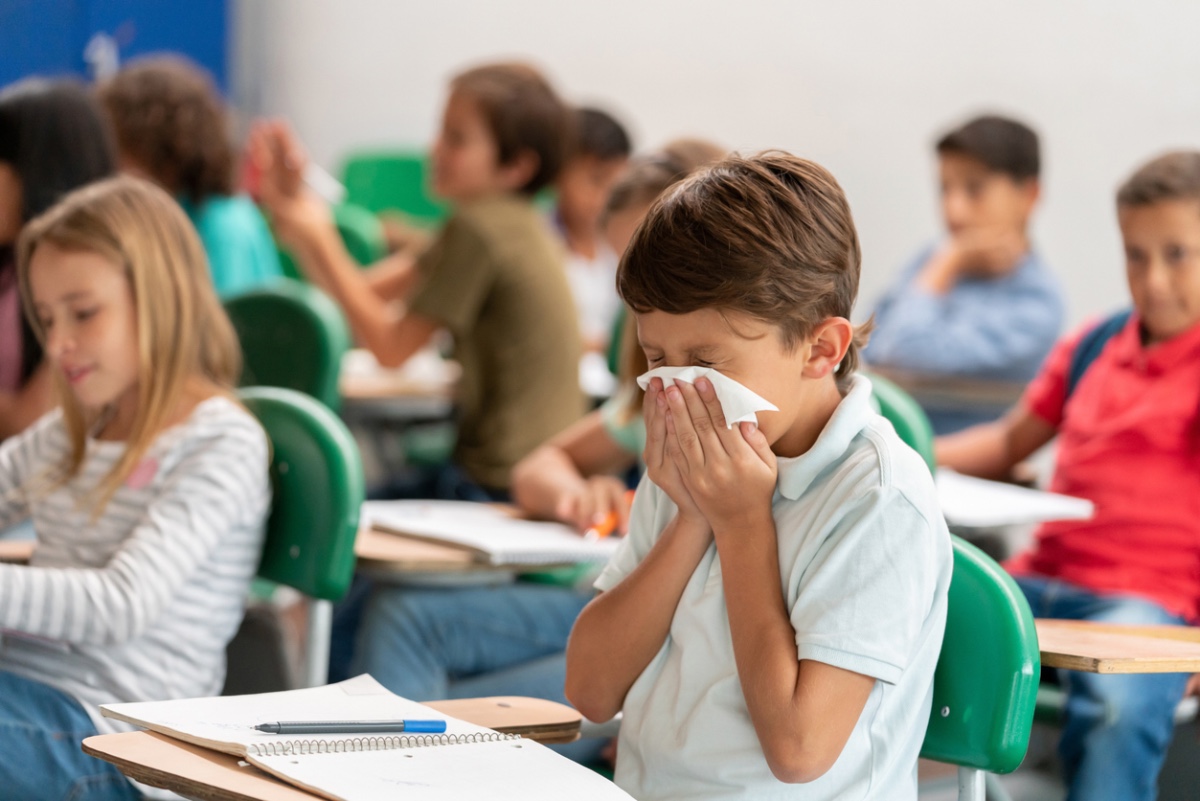
As students return to classrooms each fall, clinicians and health officials face a familiar but persistent challenge: the rapid transmission of common infections among students in group settings. The high density of contact in school settings and the immature hygiene habits in children often make schools a source of community disease spread (Gemmetto, Barrat, & Cattuto, 2014). Respiratory infections, vaccine-preventable infections, and diseases such as hand, foot, and mouth disease often proliferate in such contexts. Concerns regarding their spread remain acute in 2026, as measles resurges in parallel with recurring outbreaks of common contagious illnesses.
Vaccination remains the cornerstone of protection against many illnesses that were once common among school-aged patients. Yet national data show concerning erosion in coverage: measles, mumps, and rubella (MMR) vaccination coverage among kindergartners has declined in more than half of U.S. states, with non-medical exemptions reaching an all-time high of 4.0% nationally in the 2025–26 school year (Willens, 2026).
Only nine states currently meet the 95% coverage threshold needed to interrupt measles transmission, and measles case counts in 2026 have already surpassed the elevated levels seen in 2025 (Willens, 2026). For clinicians, this trend reinforces the importance of proactively addressing vaccine hesitancy during well-child visits, particularly ahead of school entry. Clinicians should maintain a low threshold for recommending exclusion from school for symptomatic children—guidance that applies across all infectious diseases.
Non-pharmaceutical interventions (NPIs), particularly hand hygiene and environmental disinfection, offer valuable layers of protection. A large randomized trial in Spain demonstrated that a multifactorial handwashing program combining soap-and-water washing with alcohol-based hand sanitizer reduced school absenteeism due to upper respiratory infections by 38%, with a number needed to treat of 2.21 (Azor-Martinez et al., 2016). Similarly, a cluster-randomized trial in a U.S. elementary school found that combining hand sanitizer use with surface disinfection significantly reduced gastrointestinal illness absenteeism and decreased norovirus contamination on classroom surfaces, although no significant reduction was observed for respiratory illness (Sandora, Shih, & Goldmann, 2008).
For outbreak mitigation once transmission begins, modeling data support targeted, class- or grade-level closures over blanket school closures. Using high-resolution contact-network data from a primary school, researchers found that closing a class for a fixed duration after detecting two symptomatic cases would reduce the attack rate by nearly 70%, with grade-level closures achieving mitigation nearly equivalent to whole-school closure at substantially lower educational cost (Gemmetto, Barrat, & Cattute, 2014). More broadly, the CDC recommends a “layered” prevention strategy that includes ventilation improvements, routine cleaning, illness screening, and staying home when symptomatic (CDC, 2024).
For school administration, clinicians, and parents facing the new school year, reinforcing vaccination coverage, maintaining vigilant surveillance and reporting protocols for outbreaks, promoting hand hygiene and surface disinfection, and considering targeted class-level closures when outbreaks occur are interventions supported by research.
References
- Azor-Martinez, E., Cobos-Carrascosa, E., Seijas-Vazquez, M. L., Fernandez-Sanchez, C., Strizzi, J. M., Torres-Alegre, P., Santisteban-Martinez, J., & Gimenez-Sanchez, F. (2016). Hand hygiene program decreases school absenteeism due to upper respiratory infections. Journal of School Health, 86(12), 873–881. https://onlinelibrary.wiley.com/doi/10.1111/josh.12454
- Centers for Disease Control and Prevention. (2024, May 17). CDC releases guidance for preventing spread of infections in schools to keep children healthy and learning [Press release]. https://www.cdc.gov/media/releases/2024/p0517-Preventing-Spread-Infections-Schools.html
- Gemmetto, V., Barrat, A., & Cattuto, C. (2014). Mitigation of infectious disease at school: Targeted class closure vs school closure. BMC Infectious Diseases, 14, 695. https://doi.org/10.1186/s12879-014-0695-9
- Kekatos, M. (2025, October 22). Hand, foot, and mouth disease outbreak hits 31 schools, day cares in Tennessee county. ABC News. https://abcnews.com/US/hand-foot-mouth-disease-outbreak-hits-31-schools/story?id=126752726
- Sandora, T. J., Shih, M.-C., & Goldmann, D. A. (2008). Reducing absenteeism from gastrointestinal and respiratory illness in elementary school students: A randomized, controlled trial of an infection-control intervention. Pediatrics, 121(6), e1555–e1562. https://doi.org/10.1542/peds.2007-2597
- Willens, V. (2026, August 27). Amid ongoing measles outbreaks, U.S. children remain vulnerable to vaccine-preventable disease. Johns Hopkins Bloomberg School of Public Health, International Vaccine Access Center.